There is a prince in the Korea of Perfect Crown, but no ruling royal family in the real Republic of Korea. This spoiler-free guide separates the show’s fictional constitutional monarchy from reality and explains why modern royalty is such a useful engine for K-drama class romance. The key twist is that its chaebol heiress and prince possess two very different kinds of power.
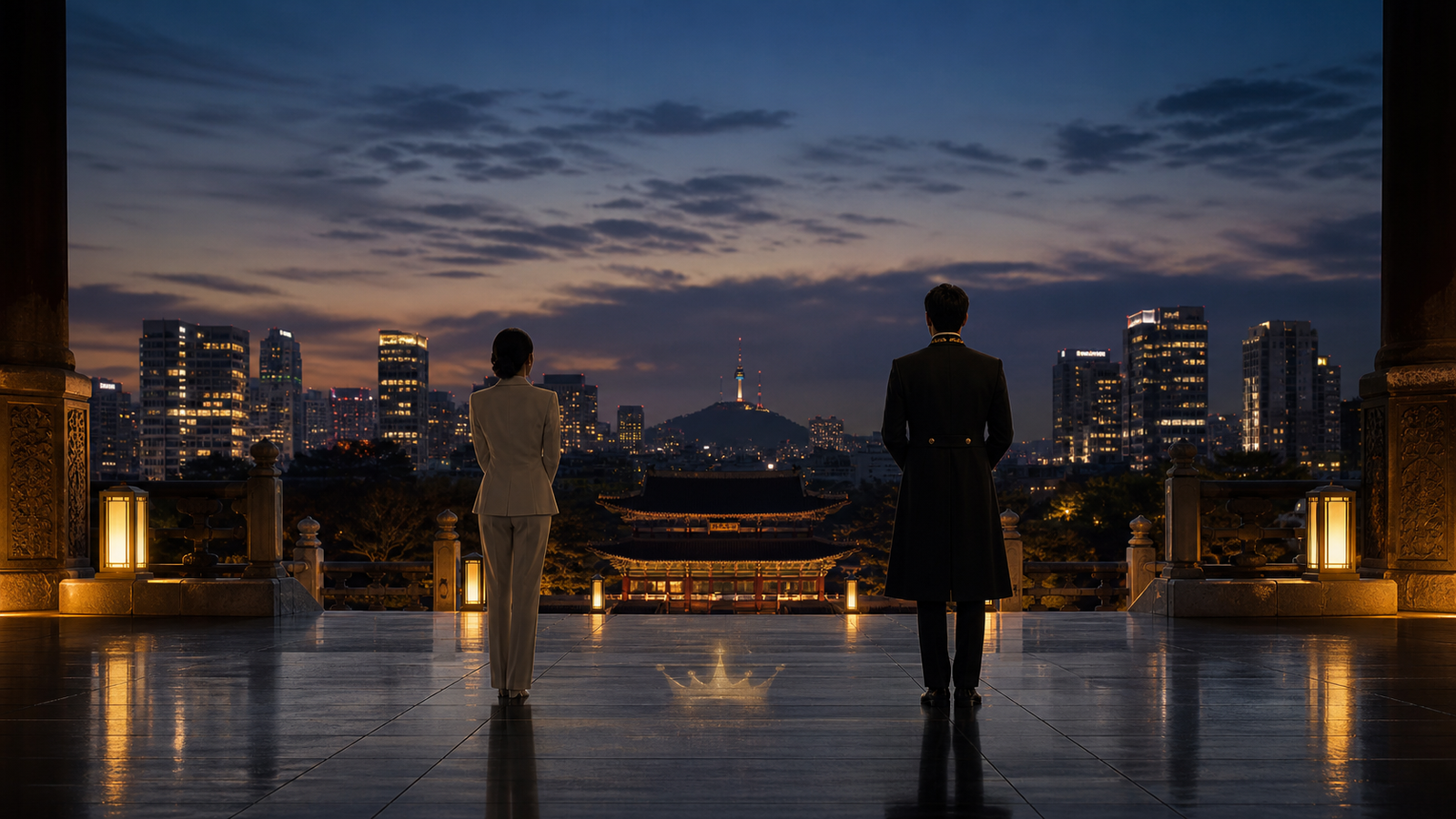
Is the Monarchy in Perfect Crown Real?
No. The real Republic of Korea is a democratic republic without a hereditary monarch. Article 1 of the Constitution states that the country is a democratic republic, that sovereignty belongs to the people, and that state authority comes from the people.
Perfect Crown imagines a different timeline. According to the official Disney+ and MBC descriptions, its version of 21st-century Korea is a constitutional monarchy. Seong Huiju is a wealthy business heiress who has money and ability but remains a commoner. Grand Prince Ian has a royal title but little freedom or property of his own. A contract marriage brings them together.
A chaebol is a large South Korean corporate group over which a founding family retains substantial influence. In K-drama, a chaebol heir often represents the highest level of economic privilege. In the fictional society of Perfect Crown, however, even immense wealth cannot purchase royal blood or a title. That mismatch creates the story’s central tension.
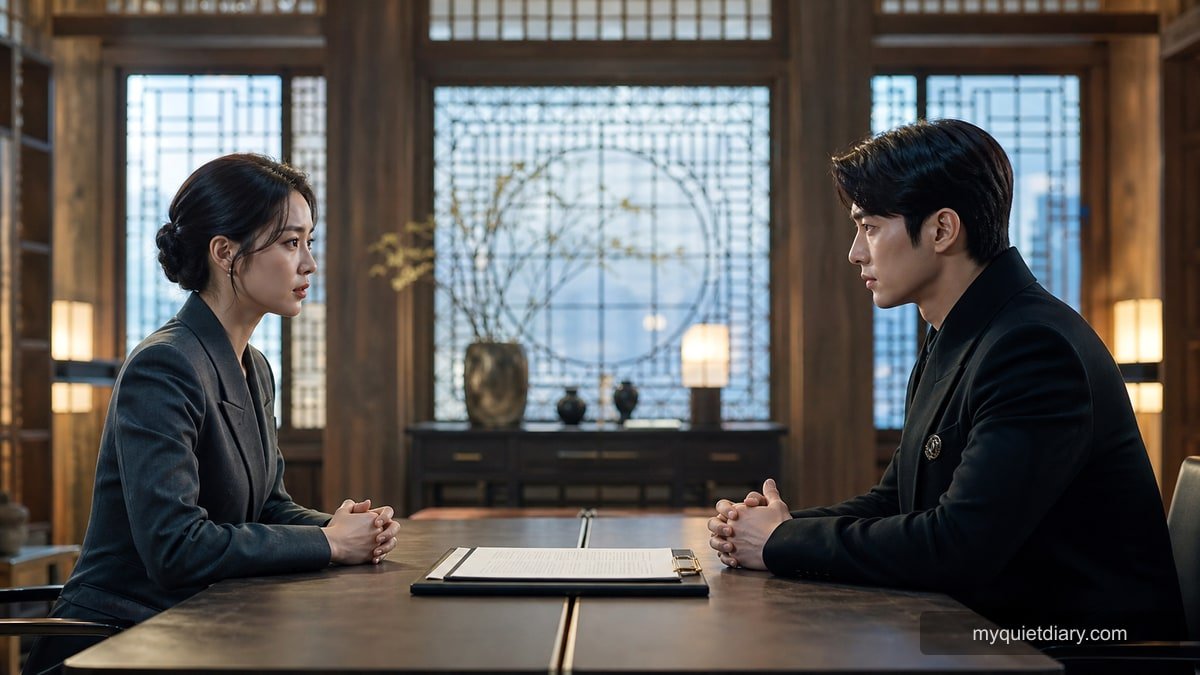
What Perfect Crown Changes About 21st-Century Korea
The show does more than place old palaces in modern Seoul. It adds a hereditary royal family to the top of the social hierarchy. The official synopsis presents Huiju as someone with corporate wealth but no status, while Ian has status but almost nothing else he can truly call his own.
This is not a depiction of South Korea’s constitutional system. Court titles and ceremonies in the series should not be treated as present-day Korean institutions. Streaming details also vary by market: official Disney+ material places the release in April 2026, but local dates and ratings can differ by country.
The alternative world still draws on familiar K-drama concerns. Family background, marriage, corporate succession, and public reputation are recurring pressures in contemporary Korean stories. Adding a palace makes a familiar chaebol romance into an even stricter status drama.
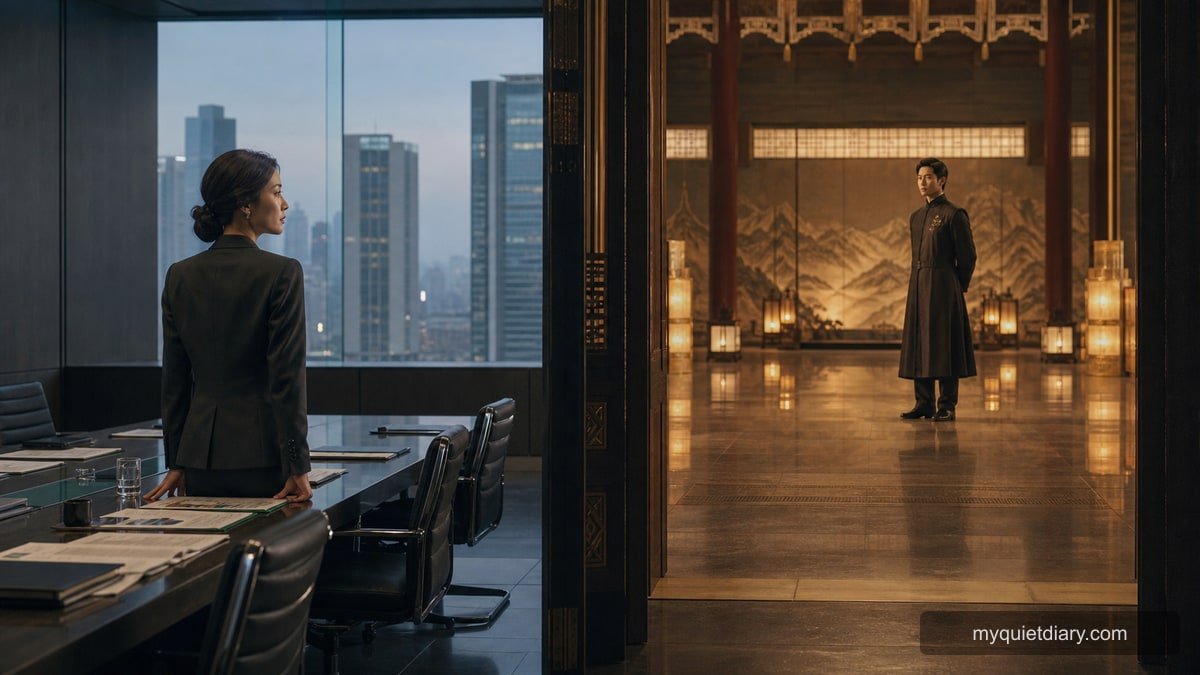
Why a Modern Royal Family Works So Well in K-Drama
A modern royal family can bring money, bloodline, duty, and privacy into conflict with very little exposition. There is no comprehensive count proving that K-dramas as a whole “love” monarchy, but several prominent series have returned to this device since 2006.
Instant status that even chaebol money cannot buy
Chaebol characters usually sit at the top of the economic ladder. Put a royal household above them, however, and money suddenly has a limit. Huiju controls capital; Ian possesses the symbolic status of birth. Each has something the other cannot simply acquire.
This is a cultural reading of the official premise, not a claim that legal hereditary classes exist in South Korea today. The fictional system exaggerates a useful question: when are wealth and status interchangeable, and when do they pull apart?
Romance under duty, scrutiny, and family rules
A prince is not merely a rich romantic lead. Succession, public image, marriage rules, and family expectations can restrict personal choice. Familiar devices such as a contract or arranged marriage therefore become public events rather than private agreements.
Modern royalty connects intimacy to institutional duty almost instantly. Falling in love can affect not only a family but also a line of succession and the stability of an institution. That compressed pressure lets a drama stage freedom against responsibility without a long setup.
Traditional Korean visuals inside a modern city
Palaces, ceremonies, and royal clothing stand in sharp contrast with glass towers, cars, and corporate boardrooms. This is different from a sageuk, the Korean term commonly used for a historical period drama. The technology and routines remain contemporary while royal architecture and symbols are pulled into the present.
Beautiful palace imagery should not be confused with the show’s invented political order. Gyeongbokgung is real cultural heritage; the modern monarchy in Perfect Crown is fiction. The palace photographs in this article are contextual images, not production stills or claims about filming locations.
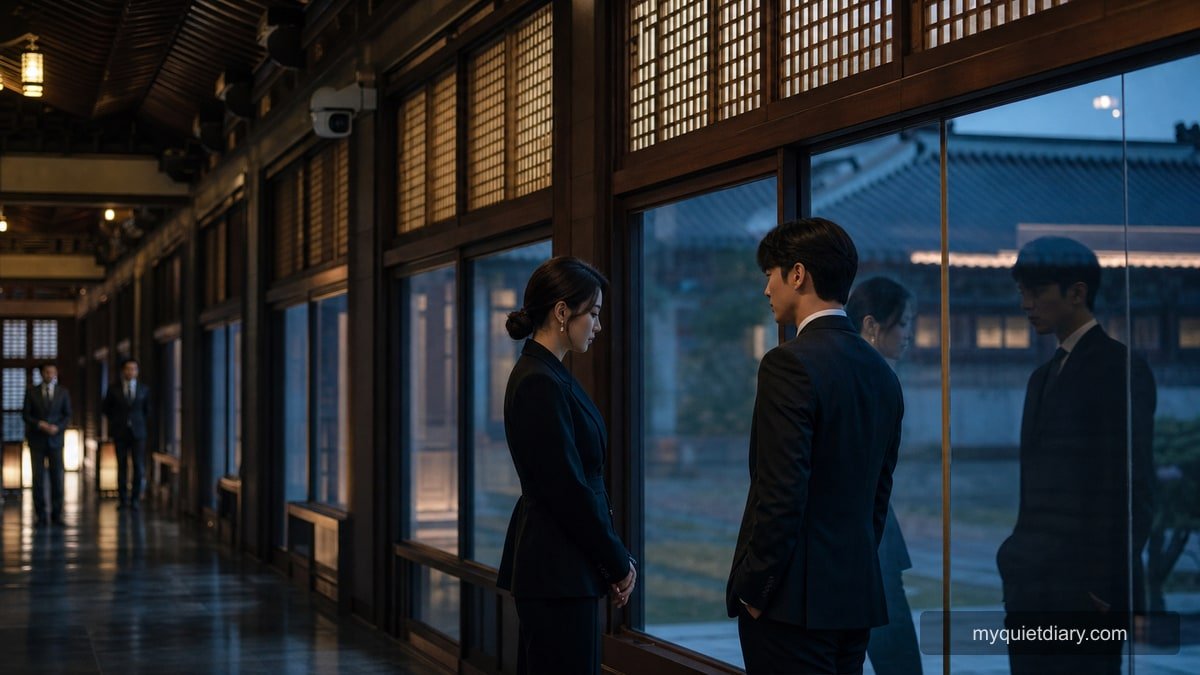
From Princess Hours to Perfect Crown: The Modern-Monarchy Lineage
Perfect Crown is not the first K-drama to imagine a royal household in contemporary Korea. MBC’s Princess Hours (2006) asked what modern Korea might look like as a constitutional monarchy, combining a marriage between an ordinary student and a prince with palace rules and class difference.
Its 2007 companion series, Prince Hours, imagined a monarchy led by a queen. A young man raised outside palace life discovers his royal lineage and enters a succession contest. Here, royalty creates questions about leadership and the responsibilities attached to privilege as well as romance.
Later dramas applied the device to other genres. The King 2 Hearts connected royalty with inter-Korean and national tensions, while The Last Empress turned imperial glamour toward melodrama, conspiracy, and thriller territory. The institutional details of those two series were not fully verified through the official English-language sources used for this article, so they are included only as broad comparison points.
According to Netflix’s official description, The King: Eternal Monarch (2020) follows a present-day Korean emperor who crosses a mysterious portal and meets a police detective in a parallel world. Its monarchy sits beside a republican reality, making alternative history itself part of the fantasy mechanism.
Across these examples, modern royalty is less a fixed genre than a flexible storytelling tool. It can add immediate pressure from rank and duty to a school romance, a succession story, a national conflict, a thriller, or a parallel-world fantasy.
What Is New About Huiju and Ian’s Power Balance?
The clearest variation in Perfect Crown is that both leads belong to an elite, but not the same elite. The basic setup of Princess Hours moved an ordinary student into palace life. Huiju, by contrast, is introduced as a capable CEO and chaebol heiress before the marriage plot begins.
Huiju has money and organizational power but no royal standing. Ian has a title and public recognition, yet that status limits his choices. In other words, economic capital and symbolic capital do not belong to the same person. Their contract can therefore be read as a negotiation between two incomplete forms of power, rather than a simple rescue or one-way rise in status.
That reading does not require an opinion about the ending or performances. The official starting premise alone shows what a fictional monarchy adds to a present-day chaebol romance.
What I Find Most Interesting About This Premise
What interests me most in the published premise is that neither Huiju nor Ian looks like a complete winner. One has money and executive ability but no bloodline; the other has a title everyone recognizes but little freedom within it. Instead of a familiar Cinderella story in which one person simply enters the other’s world, this setup makes me curious about two people who must negotiate with very different forms of lack.
I also have one reservation. A modern monarchy can look compelling through palaces, clothing, and titles alone, which creates a risk that the glamorous setting will matter more than the characters’ choices. What I hope the premise explores is not royal decoration for its own sake, but the tension between someone who has money without status and someone who has status without freedom. This is an expectation drawn from the official synopsis, not a judgment about particular scenes or performances.
For that reason, the series may appeal especially to readers who enjoy contemporary contract-marriage romances but want a variation on the familiar chaebol-man-and-ordinary-woman formula. Anyone who remembers the modern palace of Princess Hours may also find it interesting to compare what changes when a similar device meets a financially powerful heroine two decades later.
How to Watch Without Confusing Fiction with Korean History
The simplest approach is to keep three things separate.
First, the real Republic of Korea is a democratic republic grounded in popular sovereignty. No modern king or royal household governs the country.
Second, palaces such as Gyeongbokgung and Korea’s dynastic heritage are real history. Recognizable heritage on screen does not make the show’s royal institutions historical fact.
Third, Perfect Crown is a romance fantasy built around constitutional monarchy. Its titles, ceremonies, and succession rules are best understood as the rules of an invented world that magnifies class and personal freedom—not as a guide to life in present-day Korea.
A Spoiler-Free Takeaway for International Viewers
The royal family in Perfect Crown is not real. It is a fictional device that creates a form of status money cannot buy and duties an individual cannot easily escape. The series places a hierarchy of bloodline above the economic hierarchy of a chaebol romance.
The most useful question, then, is not “Does Korea have a king today?” but “Why does this story need a status higher than chaebol wealth?” That question also explains why modern-monarchy K-dramas have repeatedly revisited the palace since Princess Hours: few devices create characters with so much power—and so little freedom—quite as quickly.
Sources
- Disney+ — Perfect Crown official title page — premise, genre, and cast. Verified August 1, 2026; availability and ratings may vary by region.
- MBC Global Media — Perfect Crown — official synopsis and production credits. Verified August 1, 2026.
- Constitution of the Republic of Korea, Article 1 — democratic republic and popular sovereignty. Verified August 1, 2026.
- MBC Global Media — Princess Hours — earlier modern constitutional-monarchy premise. Verified August 1, 2026.
- Netflix — The King: Eternal Monarch — modern emperor and parallel-world premise. Verified August 1, 2026.