Why has Disney+ introduced Gold Land as Park Bo-young’s first “dark heroine” role? This spoiler-light guide explains Hee-joo’s starting point, the moral pressure built into the premise, the key cast, and the release details without revealing the ending. The most useful way to read “dark” here is not as a simple turn to villainy, but as a shift toward a woman who makes dangerous choices instead of merely enduring them.
Why Gold Land Marks a Visible Turn for Park Bo-young
First, the confirmed information: Disney+’s official cast guide describes Gold Land as Park Bo-young’s first dark-heroine role. The platform categorizes the series as drama, thriller, and crime. Park plays Hee-joo, an airport customs officer who becomes entangled with smuggled gold and enters a struggle shaped by greed, betrayal, and survival.
That phrase comes from Disney+ marketing, so it deserves a careful boundary. “First dark heroine” does not prove that every earlier Park Bo-young character was innocent, uncomplicated, or morally spotless. A more precise reading is that this role places her at the center of a crime story as someone who chooses, conceals, and deals with consequences—not simply as a sympathetic figure waiting to be rescued.
That distinction is more interesting than a cosmetic image change. A star’s transformation is often reduced to darker clothes, colder expressions, or a more violent genre. The premise of Gold Land points toward something deeper: Hee-joo is not only pulled into danger. She has agency within it, and her desire becomes part of the mechanism that moves the plot.
Spoiler-Free Premise: An Ordinary Job, Smuggled Gold, and Escalating Choices
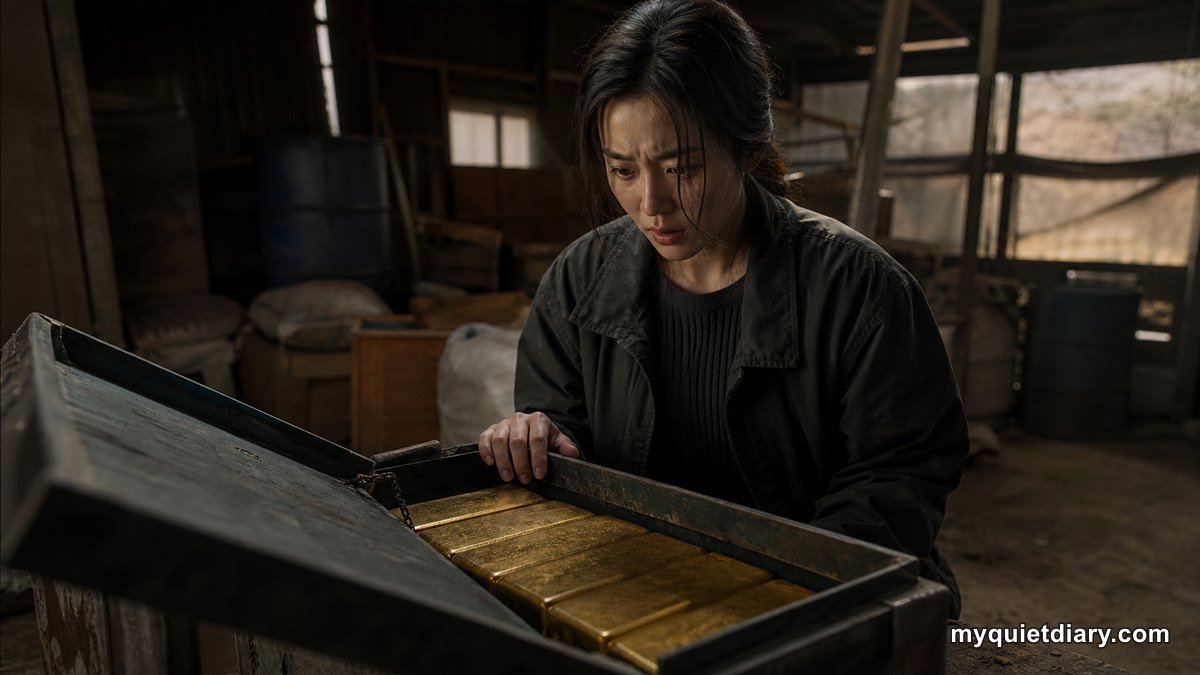
According to the official synopsis, Hee-joo comes from a rural town and works at an airport while maintaining a relationship with Do-kyung, her pilot boyfriend. She hides a package and comes into possession of smuggled gold. From that decision, the story expands beyond the metal itself into questions of greed, betrayal, trust, and survival.
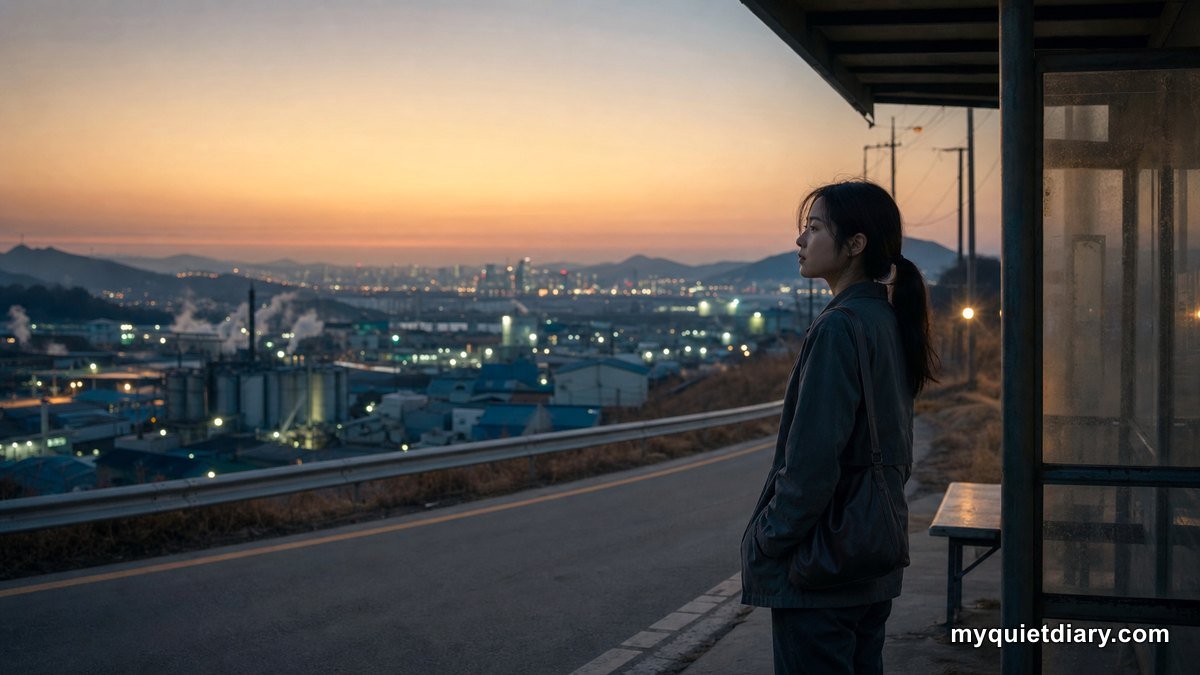
An airport customs office is an especially effective setting for this kind of thriller. Thousands of people and objects cross borders under systems designed to sort the permitted from the forbidden. The employees inside that system work with rules, suspicion, and privileged access every day. Making Hee-joo a customs officer therefore places her on the boundary rather than outside it: she understands what the line means, which also means she knows something about how it might be crossed.
This guide will not repeat unverified figures for the gold’s value or map its later ownership. Those details go beyond the official spoiler-light material used here and can expose plot developments. The essential setup is enough: Hee-joo sees an opportunity, chooses concealment, and discovers that one decision can destabilize both her relationships and her physical safety.
That structure matters because it avoids the pure-accident version of a crime plot. Hee-joo is not simply handed a problem that she immediately tries to return. The official premise identifies an act of concealment. It gives the audience a reason to ask not only what will happen to her, but why she continues and how she explains each new step to herself.
What Disney+ Means by a “Dark Heroine”
The verified fact is limited but clear: the distributor calls Hee-joo a dark heroine. This is promotional language, not a legal or fixed genre classification. Whether she should ultimately be understood as a villain, an antihero, or a desperate survivor depends on the choices shown across the series, not on a two-word label.
In critical conversation, a dark heroine usually refers to a female lead whose moral position is unstable or deliberately complicated. Her desire is not decorative. It drives events. Viewers may understand the pressure behind her actions without approving of those actions, and that gap between empathy and approval creates the tension.
This is why the label can be more productive than simply saying Park Bo-young “plays bad.” A conventional good protagonist may be threatened because she did the right thing. A morally complicated protagonist can be threatened partly because she wanted something, concealed something, or convinced herself that the next compromise was necessary. The resulting questions are sharper: Can financial or social desperation explain a wrong choice without excusing it? At what point does survival become greed? How much betrayal begins as self-protection?
The official synopsis does not settle those questions in advance. It says that Hee-joo enters a vortex of greed, betrayal, and survival. That ambiguity should be preserved. It allows the drama to position her as a person rather than a moral lesson with a predetermined answer.
Hee-joo’s Moral Pressure Without Reducing Her to a Villain
The factual point is that Hee-joo does more than witness the gold. She hides a package and becomes involved. Even this single action, disclosed in the official setup, separates her from a passive victim who has no meaningful part in the crisis.
The interpretive value comes from the contrast built around her. On one side is an ordinary life: a woman from a rural background working a demanding airport job and navigating a relationship. On the other is gold, an object that seems capable of changing that life at once. The distance between those two positions compresses the promise of mobility and the fear of punishment into the same choice.
It is tempting to classify a character like this quickly: a good person making a bad choice, or a bad person armed with a sympathetic reason. The more compelling approach is to resist that shortcut. A dark heroine becomes interesting through process. Her self-justification may shift as decisions accumulate. The circle of people she can trust may shrink. A choice first described as temporary or necessary may become part of a new identity.
That is also where Park Bo-young’s casting can do more than generate surprise. Familiar warmth can invite the audience to remain close to Hee-joo even when her behavior becomes uncomfortable. The drama can use that closeness to ask how long understanding lasts, and where a viewer finally draws a moral boundary.
Key Cast and Relationships to Know Before Watching
Park Bo-young leads the series as Hee-joo. Kim Sung-cheol plays Jang Wook, also called Wooki, a major figure connected to the pressure surrounding her choices. Lee Hyun-wook, Kim Hee-won, Moon Jeong-hee, and Lee Kwang-soo complete the principal cast named on Disney+’s official pages.
The series is directed by Kim Sung-hoon and written by Hwang Jo-yoon, with Studio Dragon participating as a co-producer. Those credits matter because Gold Land is not designed only as a showcase for one actor’s reinvention. The machinery of a crime thriller depends on competing aims: several people can look at the same gold and see escape, leverage, security, or power.
Before watching, there is no need to memorize every character biography. Three questions provide a practical map: Who wants the gold? Who appears to trust Hee-joo? Who knows more than she does? As alliances change, those questions should make the relationship network easier to follow without requiring advance spoilers.
The official English spelling of Korean names can vary slightly between Disney+ regional pages. This article uses familiar hyphenated spellings for readability while following the platform’s role and cast information. The difference is one of romanization style, not a different person.
Crime-Thriller Tension Versus Park Bo-young’s Familiar Screen Image
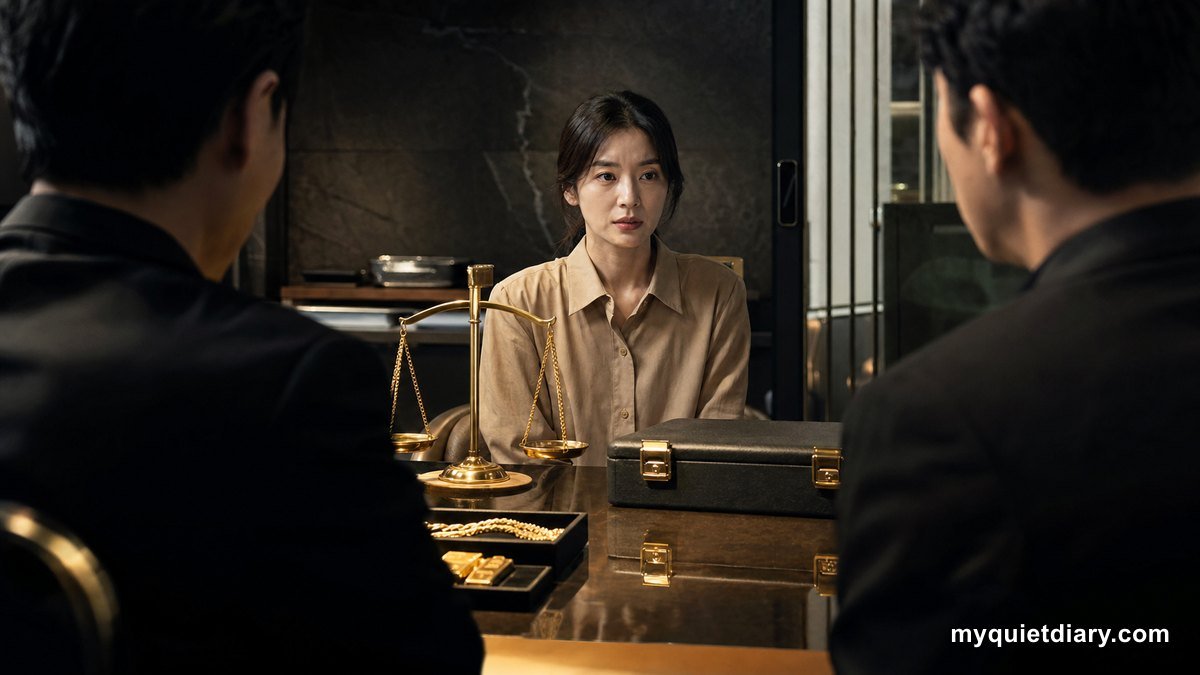
Park Bo-young is widely associated with warmth and approachability through popular romantic, fantasy, and human dramas. That is a general observation about her public screen image, not a claim that all her earlier characters share one personality. Disney+’s campaign for Gold Land emphasizes the contrast between that familiarity and a crime story driven by dangerous decisions.
This contrast can turn casting itself into a narrative tool. When viewers bring trust to an actor’s familiar face, concealment can feel more unsettling. The audience may initially search for the decent explanation behind Hee-joo’s actions. If the compromises continue, that instinct becomes part of the suspense.
In that sense, “dark” does not only mean dim cinematography, violence, or an intimidating expression. It can describe the uncertainty of not knowing how far to trust someone who still feels emotionally legible. The warmer the point of entry, the more disorienting the moral distance may become.
The most useful pre-watch question is therefore not, “How frightening does Park Bo-young become?” It is, “How long can I understand Hee-joo’s choices?” That question measures transformation through the changing relationship between viewer and character rather than through appearance alone.
This framing also avoids flattening an actress’s career into a before-and-after gimmick. A crime thriller can draw on skills already central to Park’s appeal—emotional clarity, vulnerability, and a capacity to hold audience sympathy—then place those skills in a context where sympathy is no longer comfortable. The result may feel new precisely because the familiar qualities have not disappeared.
Release Date, Episode Count, and Where to Watch
Gold Land began streaming on Disney+ on April 29, 2026. Disney+ Singapore’s official guide lists ten episodes, with two released each Wednesday through May 27. As of August 1, 2026, that announced release run is complete.
Streaming access and age ratings vary by country. The Korean Disney+ page displays a 19+ rating, but that should not be presented as a universal international classification. Viewers should check the title in their local Disney+ app or regional catalog for current availability, subtitles, dubbing, and the rating that applies where they live.
The completed schedule gives the drama one practical advantage for new viewers: it can be approached as a finite ten-episode crime story rather than an open-ended weekly commitment. At the same time, episode availability can change with licensing, so the platform’s local page remains the authoritative place to confirm access.
Who This Drama May Appeal To
Based on the confirmed genres and premise, Gold Land is likely to interest viewers who enjoy crime thrillers, morally unstable protagonists, and stories in which desire changes relationships. It may also appeal to people curious about Park Bo-young working in a register that Disney+ deliberately presents as a major tonal shift.
Viewers looking only for the lighter rhythm of a romantic comedy should note the official crime-thriller framing and the emphasis on betrayal and survival. That does not determine the quality or exact intensity of every episode, but it sets a clearer expectation than the lead actor’s earlier popular image might.
The element that seems most promising is not the word “transformation” by itself. It is Hee-joo’s agency. Stories about an ordinary person facing an extraordinary temptation are familiar because they create an immediate moral experiment: one decision narrows the options available for the next. The premise of Gold Land gives that experiment a sharp setting, a valuable object, and a protagonist whose familiar face may keep the audience emotionally close even as certainty falls away.
That is why “dark heroine” should be treated as an invitation to observe, not a verdict. The label tells us that Park Bo-young has entered a different advertised mode. The drama’s more meaningful question is what Hee-joo does with the opportunity in front of her—and when opportunity starts to look like a trap.