The short answer is no. Netflix explicitly describes the Teachers’ Rights Protection Bureau in Teach You a Lesson as a fictional organization. This spoiler-free guide explains where its action fantasy resembles real concerns in Korean education—and where it sharply diverges from education offices, teacher-protection systems, and dedicated school-violence investigators.
The Short Answer: The Bureau Is Fictional
Netflix’s official introduction places a fictional Teachers’ Rights Protection Bureau at the center of the series. The core team includes Na Hwa-jin, played by Kim Moo-yul; Choi Gang-seok, played by Lee Sung-min; Im Han-rim, played by Jin Ki-joo; and Bong Geun-dae, played by Pyo Ji-hoon. They are drama characters designed for direct intervention, action, and catharsis—not civil servants copied from a real Korean agency.
That distinction matters, especially for viewers outside Korea. The country does have organizations and personnel whose English names may sound similar: regional teacher-rights protection committees, education-office support structures, and dedicated school-violence investigators. But there is no evidence in the official sources used here of a single central bureau that enters schools and resolves conflicts through physical enforcement.
In reality, responsibility is divided. Schools and local or provincial education offices handle parts of the administrative response. Committees review cases. Investigators collect information. Counseling, medical, legal, and mutual-aid support may be offered. Police and courts become involved when a matter enters criminal or judicial territory.
The bureau is therefore interesting not because it is realistic, but because it converts frustration with slow institutions into a fast-moving fantasy. The drama is better approached as a social story that exaggerates the desire for protection than as a documentary account of daily Korean school life.
Spoiler-Free Setup and the Four-Person Team
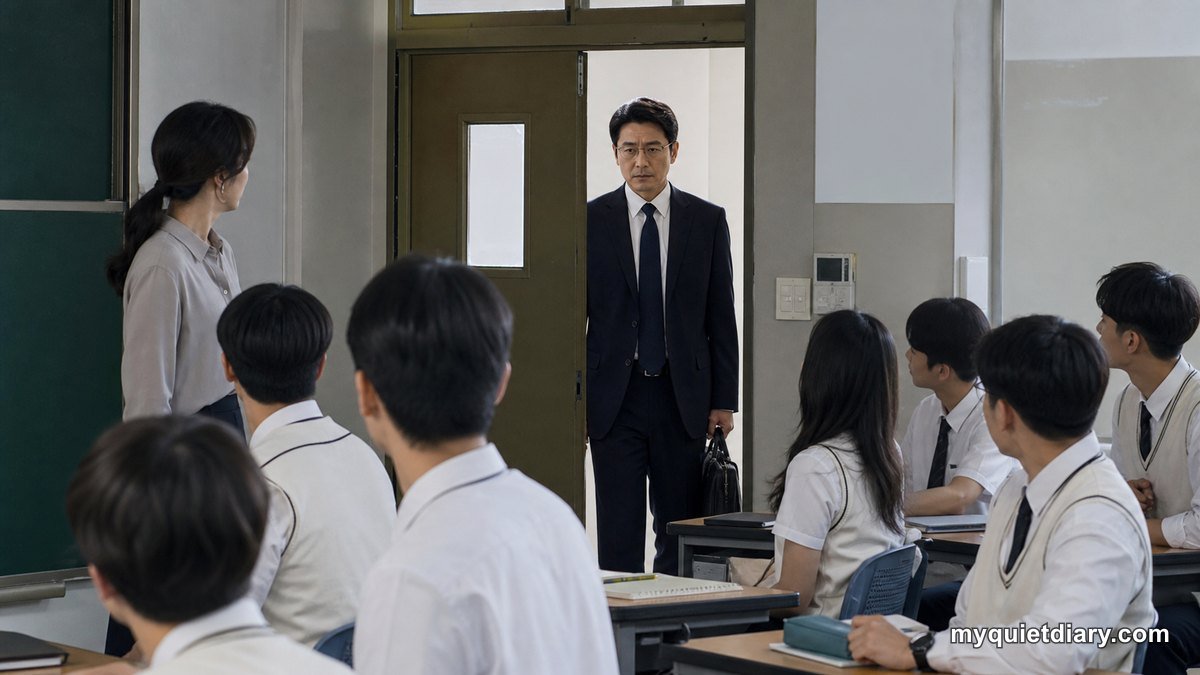
Netflix presents Teach You a Lesson as an action-driven drama that takes the side of victims in extreme educational conflicts. Na Hwa-jin and his colleagues are not quiet observers in a counseling-room story. Their fictional mandate allows them to intervene directly, turning institutional problems into confrontations that can be resolved within an episode or dramatic arc.
The official title page lists the production as a 2026 Korean limited series with ten episodes and notes that it is based on a webtoon. Hong Jong-chan directed the series, and Netflix’s newsroom credits Lee Nam-kyu as writer. The title page also lists Kim Da-hee among the creators. The series premiered on Netflix on June 5, 2026.
The distinction between fact and interpretation is useful here. The factual point is that Netflix itself labels the bureau fictional. The interpretation is that the bureau compresses several real debates—teacher protection, school violence, malicious complaints, student rights, and distrust of administrative procedures—into one forceful team.
That compression makes the premise easy to understand. A viewer does not need to learn the boundaries among a school, an education support office, a regional committee, police, and a court before the first conflict begins. The four central characters become the visible face of “the system,” even though no equivalent team holds all those powers in reality.
Why the Drama Invents an Action-Style Education Authority
A faithful depiction of administrative procedure can be slow. Reports must be filed, accounts compared, evidence collected, authority checked, and decisions reviewed. A television drama seeking action and immediate emotional release has a strong incentive to gather those distributed responsibilities into a small number of characters and shorten the distance between investigation, judgment, and consequence.
That is what the fictional bureau accomplishes. When a story first shows a victim being ignored, the arrival of a decisive outsider can feel like fairness returning to the room. The mechanism offers catharsis because it removes delays and makes institutional power personal.
Speed, however, is not the same thing as realism. Real educational disputes can involve conflicting accounts, vulnerable minors, teachers’ professional rights, parents’ concerns, medical information, and possible criminal allegations. No single person’s certainty can safely replace evidence and process.
The most revealing question may not be, “Should Korea have this exact bureau?” It may be, “Why does imagining this bureau feel satisfying?” That question allows viewers to consider public exhaustion with unresolved harm without treating dramatic violence as sound policy.
What Real Korean Education Offices and Teacher-Protection Committees Do
In Korea, protection of teachers’ educational activities operates through legislation, Ministry of Education policy, and local or provincial education-office systems. The ministry’s 2024 explanation of revised rules included regional teacher-rights protection committees, the submission of opinions by superintendents, counseling and medical support, and teacher-protection mutual-aid arrangements.
The Korean idea often translated as “teachers’ rights” should not be misunderstood as a right to punish students without limits. In this context, it concerns protecting legitimate teaching and student-guidance activities from unlawful disruption or infringement, while other laws and procedures continue to protect students.
A real regional committee is not an action squad. Its work is administrative: receiving a matter through the appropriate channel, examining information, hearing relevant positions, and considering protective or follow-up measures. Depending on the issue, a school, education support office, provincial education office, police agency, or court may hold a different part of the response.
This separation can look less dramatic, but it exists for a reason. The organization that supports a harmed person, the official who investigates facts, and the body that decides a measure do not always have identical roles. Dividing power creates review points and makes it harder for one person to become investigator, judge, and enforcer at once.
In January 2026, the Ministry of Education announced additional measures concerning school-complaint response and stronger regional centers for the protection of educational activities. The announcement included transferring certain malicious complaints to the competent office and strengthening support structures. Some items still required legislative work at the time, so it would be inaccurate to claim that every announced proposal was already fully implemented nationwide.
Current descriptions of this system should always carry a date. Policies, consolidated statutes, staffing, and local implementation can change. The comparison here reflects official material available through August 1, 2026, rather than a permanent snapshot of every Korean school district.
What Dedicated School-Violence Investigators Actually Do
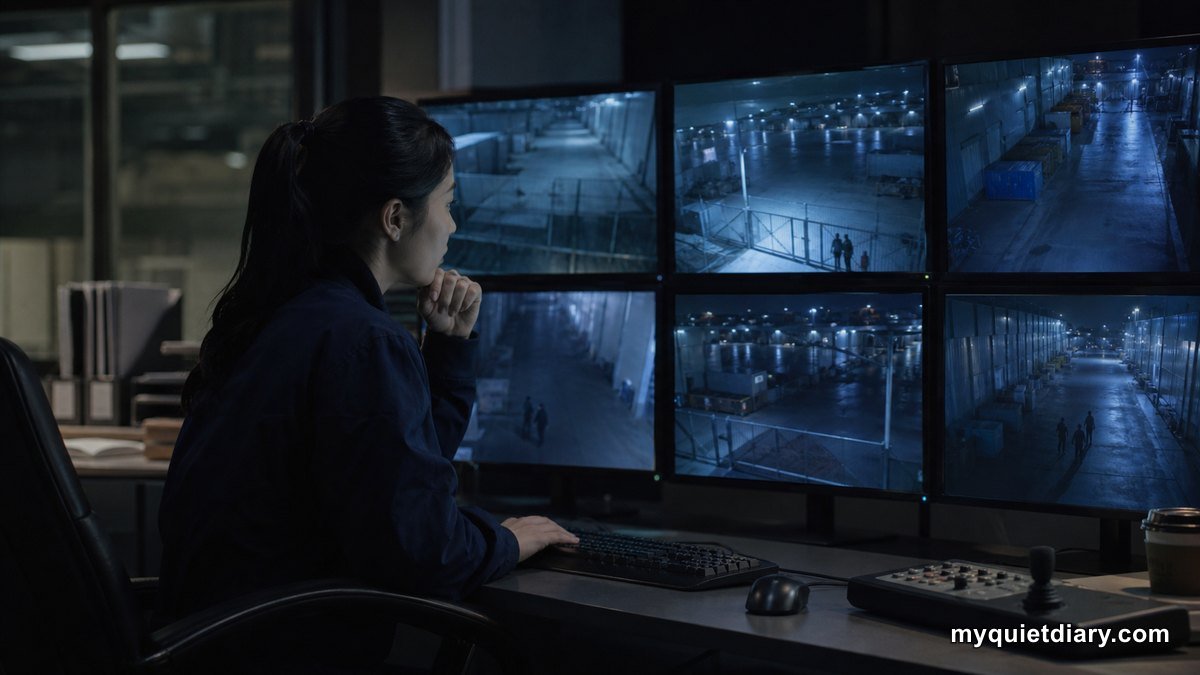
Korea began using dedicated school-violence investigators in 2024 to professionalize fact-finding and reduce the investigative burden placed on teachers. According to the Ministry of Education, these personnel draw on investigation and counseling experience, examine school-violence cases, and support a process intended to be more professional and fair. The framework also connects to personnel who support affected students.
The similar-sounding title can create confusion for viewers, but their function is very different from that of the fictional operatives. Real investigators gather statements and evidence. They do not serve as action agents or administer physical punishment. Decisions and support measures pass through the authorities and procedures assigned by law and policy.
It is also important not to collapse every school conflict into one category. School violence between students, infringement of a teacher’s educational activities, a child-abuse report, and a malicious complaint may overlap in a single dispute, but they can trigger different laws, offices, and standards. The drama can combine them because narrative economy rewards a single doorway. The real system has several doors.
This difference is not a minor technicality. If the fictional bureau is mistaken for a real agency, viewers may conclude that Korean education policy endorses intimidation or instant punishment. The official policy documents instead emphasize investigation, support, professionalism, and fairness—even when public debate questions whether those aims are consistently achieved.
Real Systems Require Both Support and Due Process
Official policy and legislation provide a framework for counseling, treatment, legal assistance, and mutual-aid-style support when teachers’ educational activities are infringed. Students also retain rights and procedural protections. “Due process” here means that facts, authority, notice, and opportunities to be heard matter before a state institution imposes a consequence.
Korean law also distinguishes legitimate educational activity and student guidance from child abuse within the relevant statutory framework. That distinction does not give teachers permission to use violence or unlimited control. Whether conduct is legitimate depends on its purpose, method, context, and the applicable legal standards.
This is where the contrast with an action drama becomes clearest. Fiction removes waiting to increase momentum. Real procedure is not supposed to be slow for its own sake. Review stages and divided authority are meant to reduce the chance that a mistaken allegation or an impulsive response causes lasting harm to a student or teacher.
That does not mean real systems always feel adequate to the people inside them. An official mechanism can exist while access, staffing, consistency, or trust remains contested. The Ministry of Education’s repeated policy changes themselves show that protection and complaint handling remain active public issues. But criticism of implementation is different from claiming the fictional bureau exists.
The drama’s moral clarity may be emotionally attractive because real cases are messy. Cultural context requires holding both observations at once: the fantasy responds to genuine anxiety, and the fantasy’s methods are not a factual model of Korean governance.
What the Drama Can—and Cannot—Reveal About Korean School Culture
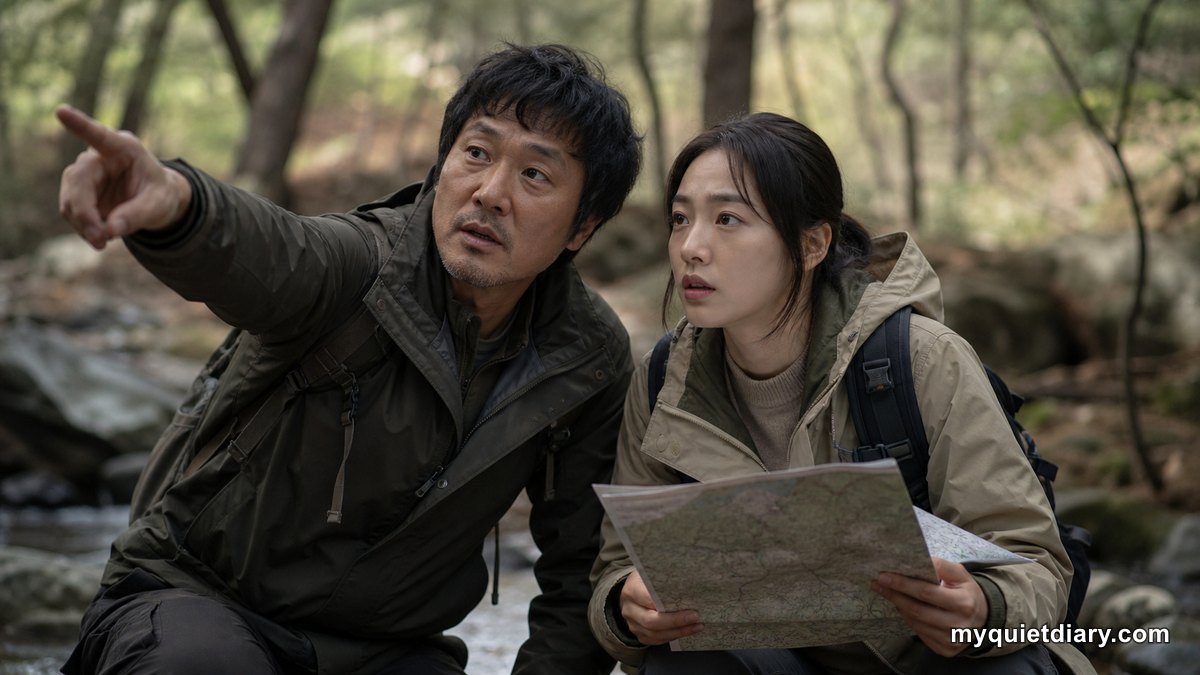
The series can illuminate feelings that appear in real educational debates: fear that a victim will not be believed, anxiety that teachers cannot maintain a safe learning environment, conflict over authority, and distrust surrounding complaints or violence investigations. The existence of policy changes involving committees, investigators, and regional protection centers confirms that these questions occupy public institutions as well as fiction.
What the series cannot do is prove that its most extreme incidents represent ordinary life in every Korean school. Korean school culture varies by region, age level, leadership, community, and individual classroom. A dramatic case is a concentrated story about social fear, not statistical evidence about an entire national system.
This distinction protects viewers from two opposite mistakes. One is romanticizing Korean schools based on polished campus dramas. The other is treating a violent social thriller as a hidden-camera report. Neither genre supplies a representative sample.
A more useful viewing approach is to treat Teach You a Lesson as the beginning of questions. Which kinds of harm fall through institutional gaps? Who decides the balance between protection and rights? Can the swift justice an audience desires remain fair when applied to real people? Those questions become clearer once the imaginary bureau is not confused with an actual government body.
Viewing Information and a Final Context Note
Teach You a Lesson premiered on Netflix on June 5, 2026. Netflix lists it as a ten-episode limited series based on a webtoon. Because it includes violence and intense school conflict, viewers should consult the content guidance and age rating shown in their local Netflix region. The Korean page’s 19+ classification should not be generalized to every country.
The one piece of context to remember is simple. The Teachers’ Rights Protection Bureau is fictional, but the concerns compressed into it—teacher protection, school violence, complaint handling, student rights, and confidence in institutions—belong to real policy debates.
Keeping fiction and reality separate does not reduce the drama’s force. It makes the premise more revealing. Viewers can engage with its catharsis while refusing the assumption that one extreme scene defines Korean classrooms, and they can ask why a fantasy of instant intervention felt necessary in the first place.
Sources
- Netflix Newsroom, “Teach You a Lesson” (accessed August 1, 2026)
- Netflix, Teach You a Lesson title page (accessed August 1, 2026)
- Korean Ministry of Education, teacher-protection rules, March 19, 2024
- Korean Ministry of Education, dedicated school-violence investigators, February 20, 2024
- Korean Ministry of Education, school-complaint and educational-activity protection measures, January 22, 2026