Portraits of Delusion places a painter, a secluded woman, and a dangerous portrait commission in 1935 Gyeongseong. That setting is not merely vintage Seoul, and the mysterious woman should not automatically be described as proof of an ancient Korean vampire tradition. This guide separates the Disney+ drama’s confirmed premise from the real colonial history and explains how global Gothic imagery can take on a specifically Korean meaning. As of August 1, 2026, an exact release date and episode count had not been officially confirmed.
What Is Portraits of Delusion About?
Disney+ gives the series a compact mystery. Iho, a painter with a hidden past, is commissioned to paint the portrait of the secluded and alluring Song Jeonghwa. As he works, he begins to uncover her secrets. Disney+ classifies the title as drama, thriller, and fantasy and confirms Suzy and Kim Seon-ho as its stars.
The official English WEBTOON page for the source comic, Delusion, offers the starting situation in sharper detail. It is 1935 in Gyeongseong, and struggling artist Iho Yun receives a commission from the reclusive, elderly Madam Jeonghwa Song. The assignment is to produce an updated portrait. The premise quickly makes age, appearance, and the reliability of an image central to the mystery.
That is enough to understand the hook without revealing the story’s later answers. A portrait painter must look at a face for a long time, but he can only paint the surface his subject permits him to see. He is both an observer and an interpreter. If the model’s public age, physical appearance, memory, and identity do not align, every brushstroke becomes an investigation.
The portrait also creates slower suspense than a camera snapshot. It requires repeated sittings, proximity, and conversation. Iho cannot solve the commission by glancing once and leaving. He must remain in Jeonghwa’s controlled space, giving her time to observe him in return.
Why 1935 Seoul Was Called Gyeongseong
Gyeongseong—also rendered Keijō in Japanese colonial usage—was the official name used for Seoul under Japanese colonial rule. The year 1935 falls within the 1910–1945 occupation of Korea. Calling the setting Gyeongseong therefore does more than make dialogue sound old. It identifies a city whose government, planning, language, and public institutions operated within a colonial power structure.
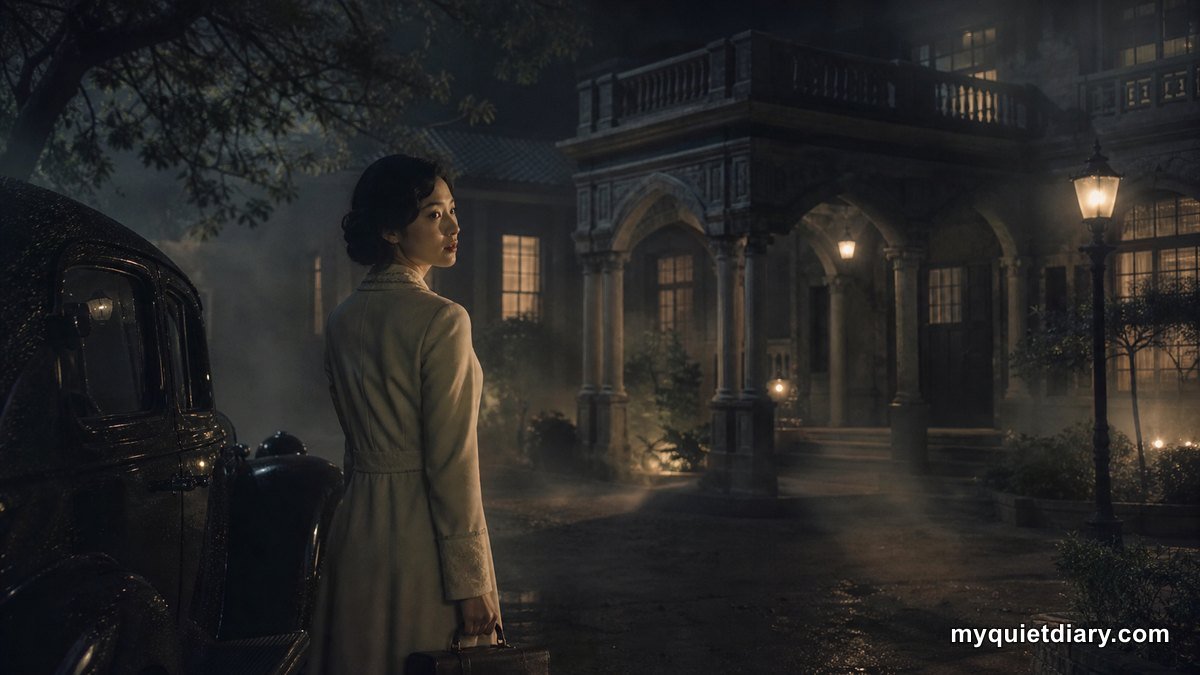
Image source: Seoul Museum of History / Wikimedia Commons_(cropped).jpg), Public Domain and KOGL Type 1. Cropped, color-adjusted, and processed with a myquietdiary.com watermark.
The city was changing quickly. Railways, electric infrastructure, newspapers, department stores, hotels, cinemas, and Western-style buildings helped create the visual experience of an expanding modern capital. Yet “modernization” was not politically neutral. Access to authority and opportunity was shaped by colonial rule, surveillance, discrimination, and the unequal organization of urban space.
That contradiction is valuable for Gothic storytelling. Gothic fiction often places the modern and the buried past in the same building. It is drawn to respectable surfaces that conceal violence, inherited guilt, locked rooms, and records that cannot be trusted. Colonial Gyeongseong offers those tensions without requiring the drama to invent them: new technology and old hierarchy, cosmopolitan movement and coercive control, bright public streets and private fear.
The historical context must still be kept separate from the fantasy plot. A fictional vampire does not explain colonial history, and the drama should not be treated as a documentary. Knowing the period simply helps viewers recognize that a hotel, official building, or portrait studio may carry political meaning in addition to visual style.
The Portrait, the Hotel, and Colonial Modernity
A hotel is an especially effective location for this kind of story. It is more anonymous than a family home and more enclosed than a street. Travelers arrive with incomplete histories. Staff see private habits while being expected to remain discreet. A wealthy proprietor can control access, information, and the movement of visitors.
In a rapidly changing colonial city, a hotel can also represent selective cosmopolitanism. Its architecture, imported goods, electric lights, and international guests may suggest openness, yet its doors and rooms divide people by money, status, and permission. The building promises movement while making confinement easy.
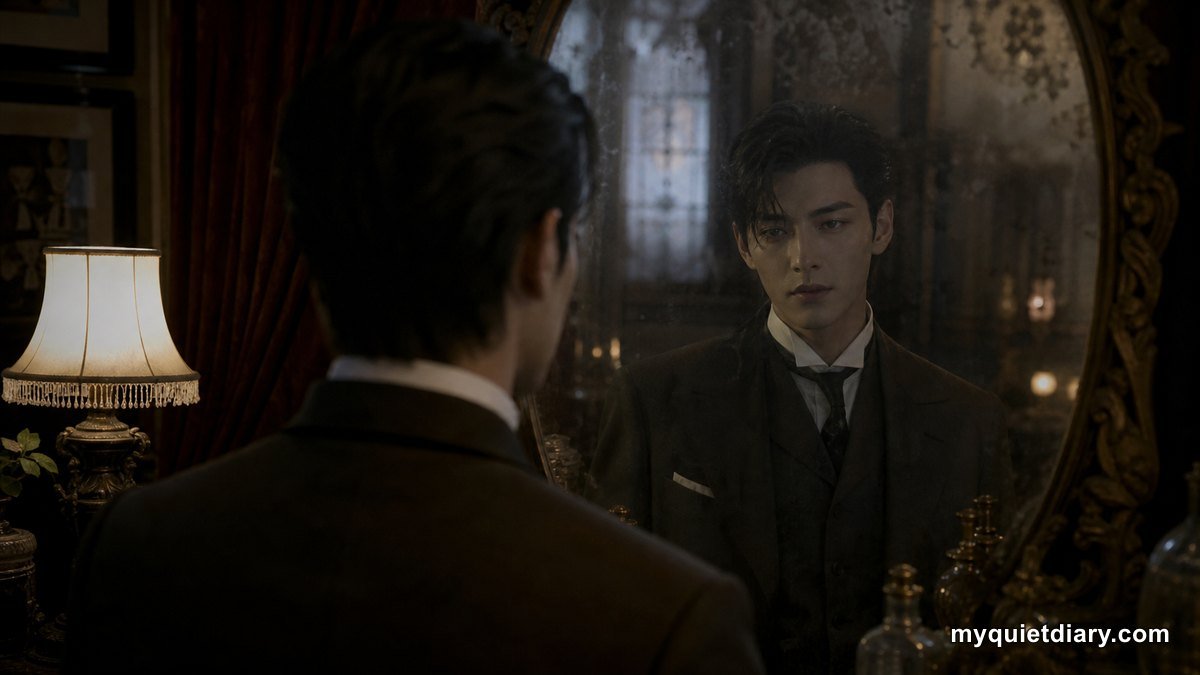
Image source: Wikimedia Commons / unknown author, Public Domain. Cropped, color-adjusted, and processed with a myquietdiary.com watermark.

The portrait carries a related tension between modern record and personal control. Photography was already transforming how people documented faces and events, but a painted portrait demanded time and interpretation. It could flatter, conceal, idealize, or make a claim about status. Commissioning a portrait was not only a request to copy a face; it was a request to decide which face would survive.
For Jeonghwa, that raises an obvious thematic question: who owns her image? The painter holds the brush, but the patron controls the commission. The public may know an old reputation while the person in the room presents something different. The gap between those versions is where Gothic unease grows.
This reading comes from the officially available premise rather than completed episodes. The drama may emphasize other themes when released. Still, the combination of portraiture, a secluded patron, and a colonial-era hotel gives the adaptation a more precise identity than the generic label “vampire romance.”
Does Korea Have a Traditional Vampire Myth?
The short answer is that Korea does not have one dominant traditional creature that maps neatly onto the standardized vampire of European Gothic popular culture. Korean folklore contains many supernatural beings and stories involving restless death, corrupted bodies, illness, blood, or dangerous nighttime encounters. Translating all of them as “Korean vampires,” however, erases meaningful differences.
A gwishin is broadly a ghost or spirit of a dead person. Many familiar stories concern a wonhon, a resentful or aggrieved spirit unable to leave because of an unjust death or unresolved emotion. Such stories often focus on memory, recognition, and the restoration of moral order. The spirit may terrify the living, but drinking blood and sustaining an immortal body are not necessary defining features.
A dokkaebi is different again. Often translated as goblin, it is not simply the ghost of a dead human and can move between menace, mischief, strange generosity, and comic disorder. Treating a dokkaebi as a vampire would be no more accurate than treating every European fairy as Dracula.
The modern popular vampire has accumulated another set of expectations: prolonged life, blood consumption, contagious transformation, aristocratic attraction, bodily appetite, and particular weaknesses. Not every vampire story uses every rule, but that shared vocabulary comes largely through global Gothic literature, cinema, television, and comics.
How Global Gothic Language Is Localized
The more useful question is not “Which ancient Korean legend proves this vampire is authentic?” It is “What happens when a global monster enters a Korean historical setting?” Localization does not require finding an exact native equivalent. A familiar genre figure can acquire new meanings from the place, politics, and visual culture around it.
In 1935 Gyeongseong, unnatural longevity can evoke the survival of hidden privilege. A controlled portrait can evoke the manipulation of public records. Hunger can be connected to class and unequal access. Seclusion can feel like Gothic mystery and like protection from a monitored city. These are interpretive possibilities, not confirmed plot facts, but they show why setting matters.
The distinction also protects Korean folklore from being flattened for search traffic. Gwishin, wonhon, and dokkaebi deserve to be understood on their own terms. Portraits of Delusion can still be called Korean Gothic because its global genre grammar is being rearranged through Korean characters, spaces, history, and artistic motifs.
From Hongjacga’s WEBTOON to Disney+
The source WEBTOON uses the vertical screen as a suspense tool. A reader controls the descent into a room or the approach to a face by scrolling. Empty space can delay the next image. A reveal can wait just below the edge of the phone. Color, panel length, and the distance between speech bubbles regulate breathing and expectation.
Television cannot copy that physical action. It must rebuild the effect with duration, framing, lighting, sound, and performance. A face may remain outside the frame. Footsteps may arrive before their source. A character can hold a pose a little too long. Music can stop rather than swell. The successful adaptation will translate the purpose of the scrolling rhythm, not simply reproduce individual panels.
The greatest risk is revealing too much too quickly. Promotional horror often favors a striking transformation or a single shocking image. Yet the official premise depends on the gradual act of making a portrait and discovering a person. If the answer becomes more important than observation, the slow-burn tension may disappear.
The opposite risk is pure atmosphere. Beautiful rooms, period clothing, and dim red light can produce an attractive trailer without producing emotionally clear characters. Iho needs a reason to keep painting despite danger. Jeonghwa needs to be more than a collection of elegant secrets. Their choices must organize the mystery.
As of the verification date, Disney+ had not officially detailed how much of the WEBTOON the series will cover or how its chronology may be rearranged. Any scene-by-scene comparison should wait until the episodes exist.
What Suzy and Kim Seon-ho’s Characters Represent
Disney+ officially identifies Suzy and Kim Seon-ho as the leads. Within the premise, their characters occupy opposite sides of the portrait. Iho looks, interprets, and creates a record. Jeonghwa is looked at, but she also hires the artist, controls the setting, and decides what he may initially know.
That makes their relationship a contest over representation. Who has the authority to define another person? Does the painter reveal truth, or manufacture a persuasive version of it? Can a subject remain powerful while becoming visible? These questions connect the supernatural mystery to the politics of portraiture and colonial archives.
They also complicate the usual hunter-and-monster structure. Iho may be investigating Jeonghwa, but entering her space makes him observable too. The person behind the easel is not automatically outside the frame of danger.
This is an editorial interpretation of the official setup, not a review of the actors’ chemistry or performance. Until full episodes are released, it would be misleading to praise a particular scene, scare, romance, or ending as if it had been watched.
Confirmed Facts and Open Questions as of August 1, 2026
The confirmed information is limited but useful. Portraits of Delusion is coming to Disney+. The official service page classifies it as drama, thriller, and fantasy and names Suzy and Kim Seon-ho. The synopsis centers on Iho painting the secluded Song Jeonghwa and discovering her secrets. The official English WEBTOON begins in 1935 Gyeongseong.
The exact release date, total episode count, and detailed adaptation boundary remained unconfirmed in the official sources used here. The completed drama’s balance of historical periods, the extent of changes from the comic, and specific filming locations should not be stated as settled facts yet.
Viewers should also resist calling it a faithful record of “Korean vampire folklore” before seeing how the series frames its creature. Disney+ describes a sorrowful vampire, but that does not establish a direct line to one traditional Korean legend. Korean Gothic is a productive description; ancient native Dracula is not.
The most rewarding preparation is therefore historical rather than spoiler-heavy. Understand that Gyeongseong was colonial Seoul. Notice how portraits decide which appearance enters the record. Watch how hotels and monumental buildings organize access. Then let the drama reveal what it does with those materials.
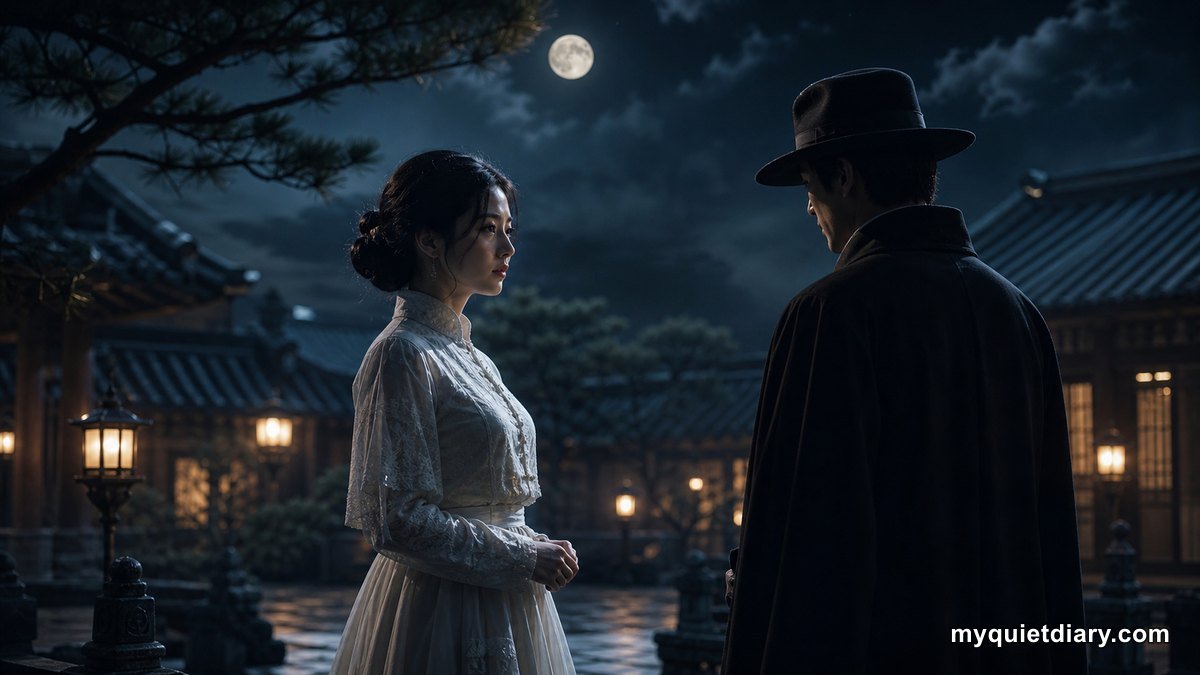
Image source: Wikimedia Commons / unknown author, Public Domain. Cropped, color-adjusted, and processed with a myquietdiary.com watermark.

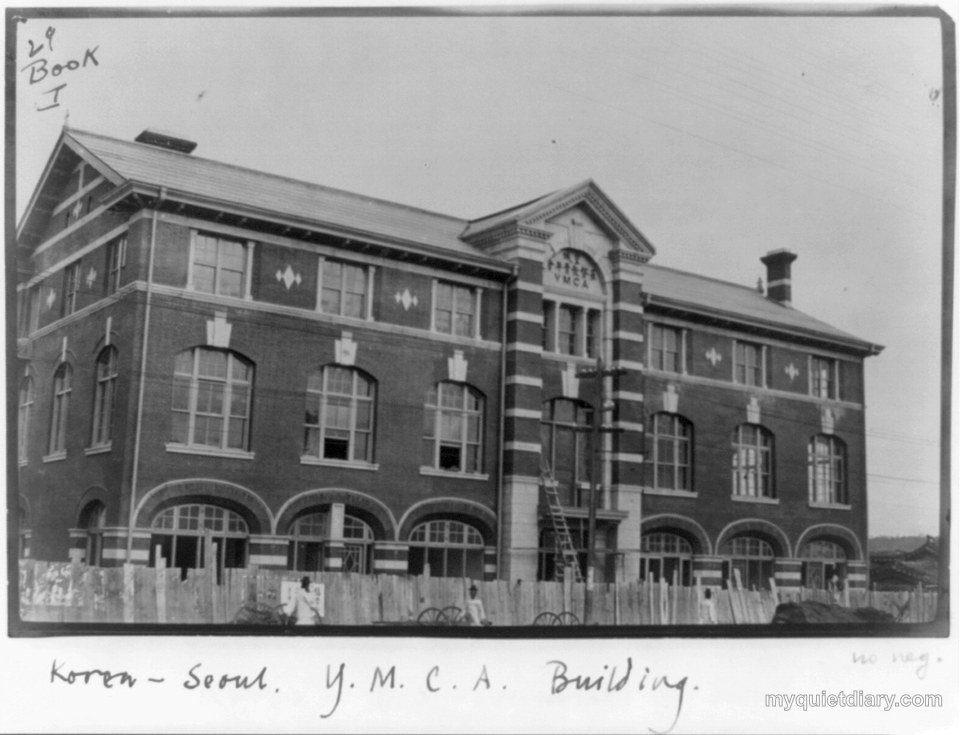
Image source: Library of Congress / Wikimedia Commons, Public Domain. Cropped, color-adjusted, and processed with a myquietdiary.com watermark.

If the adaptation works, its vampire will be memorable not because Korea needed its own copy of Dracula, but because the monster could only produce these meanings in this city, at this historical moment, through this act of looking.
Sources
- Disney+ — Portraits of Delusion — verified August 1, 2026
- Disney+ — Korean Dramas Coming in 2026 — verified August 1, 2026
- WEBTOON — Delusion — verified August 1, 2026
- National Institute of Korean History — verified August 1, 2026